Sunday, August 29, 2010

What's your flavor of reading?


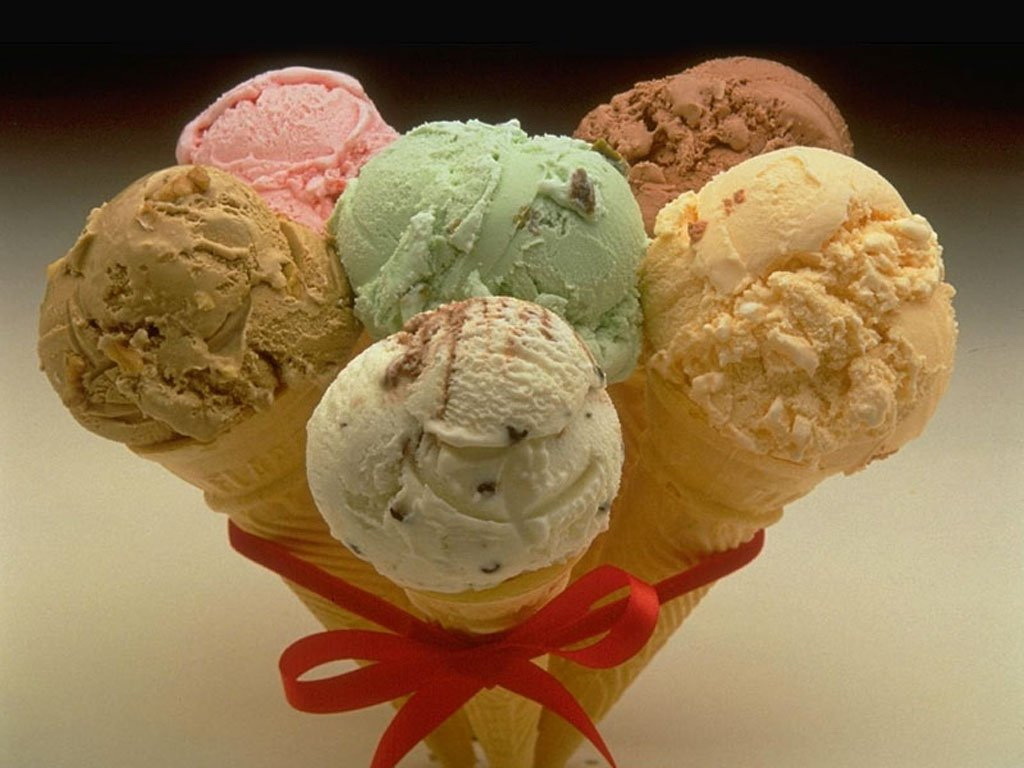
Flavor.... One small word but so there are so many options when it comes to flavor. You can go to the store and get just about any flavor of ice cream these days. It really depends on your mood which one stands out to you. Well, in Readers Workshop this week we learned there are MANY flavors of books. In reading, fiction and nonfiction are like the chocolate and vanilla. However, we learned this week there are many more!

Students were exposed to the variety of genres under each fiction and nonfiction. For example, fiction can be broken down to fantasy, realistic fiction, science fiction, historical fiction, mystery. Nonfiction can be broken down into information, autobiography, and biography. Poetry is a special genre of its own though. During the next week we will dip into these flavors more to really figure out which flavor suits us as we may have not tried them all. Students are recommended to make sure they are getting a variety of these flavors each week to make sure they don't get bored. Perhaps this week they may find they have a new favorite.......

Practice your new reading skills!

Friday, August 20, 2010

Welcome to our Garden of Learning


Are you ready to grow? We know that our 3rd Graders sure are! It was so refreshing for us to see such smiling and eager faces enter the class today and greet us. We were amazed on how friendly, kind, and excited everyone was to meet each other. What a fabulous orientation we had and we look forward to getting to know each of our little seeds better so that you can grow into a beautiful, intelligent flower. Everyone was a bit nervous but the laughs were heard all around the room. Also, thank you parents for taking time to attend and introduce yourself to us.

Just a few reminders for parents:

-Please return all papers and supplies in the folder you received today as soon as possible
-We are asking you bring one reusable bag for your child to store their books in they will use for daily readings. - Prepayments for lunch begin the 31st. Send in a daily amount with your child in a labeled bag/envelope with their first/last name.
- Your child will be receiving their Chets Creek t-shirt on Monday. Please have them wear it Tuesday.
-Read through the Connection and our Newsletter for important upcoming dates.
We will see you bright and early at 9am on Monday to begin the year! Let's make it a great one.

Sunday, June 13, 2010

A final farewell!


Tear, tear, tear....It is that time again! As school has come to an end we were all full of emotions: sadness, joy, excitement...well mostly sadness for Mrs. Tsengas and I! There were tears sweeping all over the classroom as some of us part for the first time in 2 years. It has been an amazing journey for all of us. Many of you have been a part of our class for 2 yrs now and we have all grown into a very close family. You will all do fabulous next year and I am SO PROUD of each one of you. I have loved being able to see you grow and develop.
Have a safe and thrilling summer. Don't forget to keep up the phenomenal reading. Here is a link to suggested summer reading books as well.
Remember to always keep in touch and stop by and visit next year!

Thursday, May 13, 2010

Writing our Book Response

As we have been busy writing our responses to Bill Peet books, we learned the strong parts in every paragraph: A topic sentence, reasons, details/support from the story, and a concluding sentence. Below is a group work activity we did to capture each part before independently working.

Each group was given one part of a strong paragraph. In their groups, they were to create an example of what it would look like. For example, the 'topic sentence' group had to create a topic sentence...etc. Students need to be actively involved in writing lessons to ensure they fully understand. Plus, it is a great way for them to help and learn tools and skills from each other.

Excellent group work class!

Wednesday, May 5, 2010

Figurative Language

How do you add some spice to your writing? Well, this week students have learned how to add different types of figurative language into their writing response. Figurative Language is the use of words that go beyond their ordinary meaning. It requires you to use your imagination to figure out the author's meaning. We have noticed Bill Peet uses many types of this language in his books. This type of language is more humorous and adds life to his stories. Authors use this language to engage the reader. Therefore, students were challenged this week to do the same as great writers learn from what they read! Below are common types we discussed in class.

Simile
A simile uses the words “like” or “as”to compare one object or idea with another to suggest they are alike.Example: busy as a bee

Metaphor
The metaphor states a fact or draws a verbal picture by the use of comparison.A simile would say you are like something; a metaphor is more positive - it says you are something.Example: You are what you eat.

Personification
A figure of speech in which human characteristics are given to an animal or an object. Example: The rain screamed down the window.


Alliteration
The repetition of the same initial letter, sound, or group of sounds in a series of words.Alliteration includes tongue twisters. Example: She sells seashells by the seashore.

Onomatopoeia
The use of a word to describe or imitate a natural sound or the sound made by an object or an action. Example: snap crackle pop

Hyperbole
An exaggeration that is so dramatic that no one would believe the statement is true.Tall tales are hyperboles.Example: He was so hungry, he ate that whole cornfield for lunch, stalks and all.

Idioms
A group of words that have a meaning that is different from its ordinary meaning. Example: Put a lid on it! Means-be quiet.


Cliche
A cliché is an expression that has been used so often that it has become trite and sometimes boring. Example: Many hands make light work.

Practice your skills and test your knowledge of these great tools to add to your writing!

Saturday, April 17, 2010

Relating to the World

During our author study on Bill Peet, we have been reading many of this stories and seeing the connections between not only his stories, but our lives as well. Despite the fact many of his books are fantasy fiction stories, we learned how to relate the feelings, situations, and experiences to our lives and the world around us.


In a recent lesson we studied how to make a text-to-world connection. Text-to-world connections are made when readers relate topics or situations in a book that they know from the world around them through things from the television, movies, magazines, and newspapers. An example of a text-to-world connection would be when a reader says, "I saw a program on television that talked about things described in this book."

Text-to-world:What does this remind me of in the real world?How is this text similar to things that happen in the real world? How is this different from things that happen in the real world? How did that part relate to the world around me?

Here are some sample paragraphs relating a Bill Peet book of their choice to the world!


The writer related to idea that many people farm in the world just how the make believe dragon Doofus did.


The writer related to the problem of pollution that the fantasy story mentioned. The writer gave details and supported her idea with specific references to the text.


The last writer made a text-to-world connection with the story Ella. The writer discussed the similar events in the world such as the circus and trains. Next, the writer connected to the feelings people can have that were similar to the character's feelings.

Keep up the superb connections young writers!